 PinoyRemote

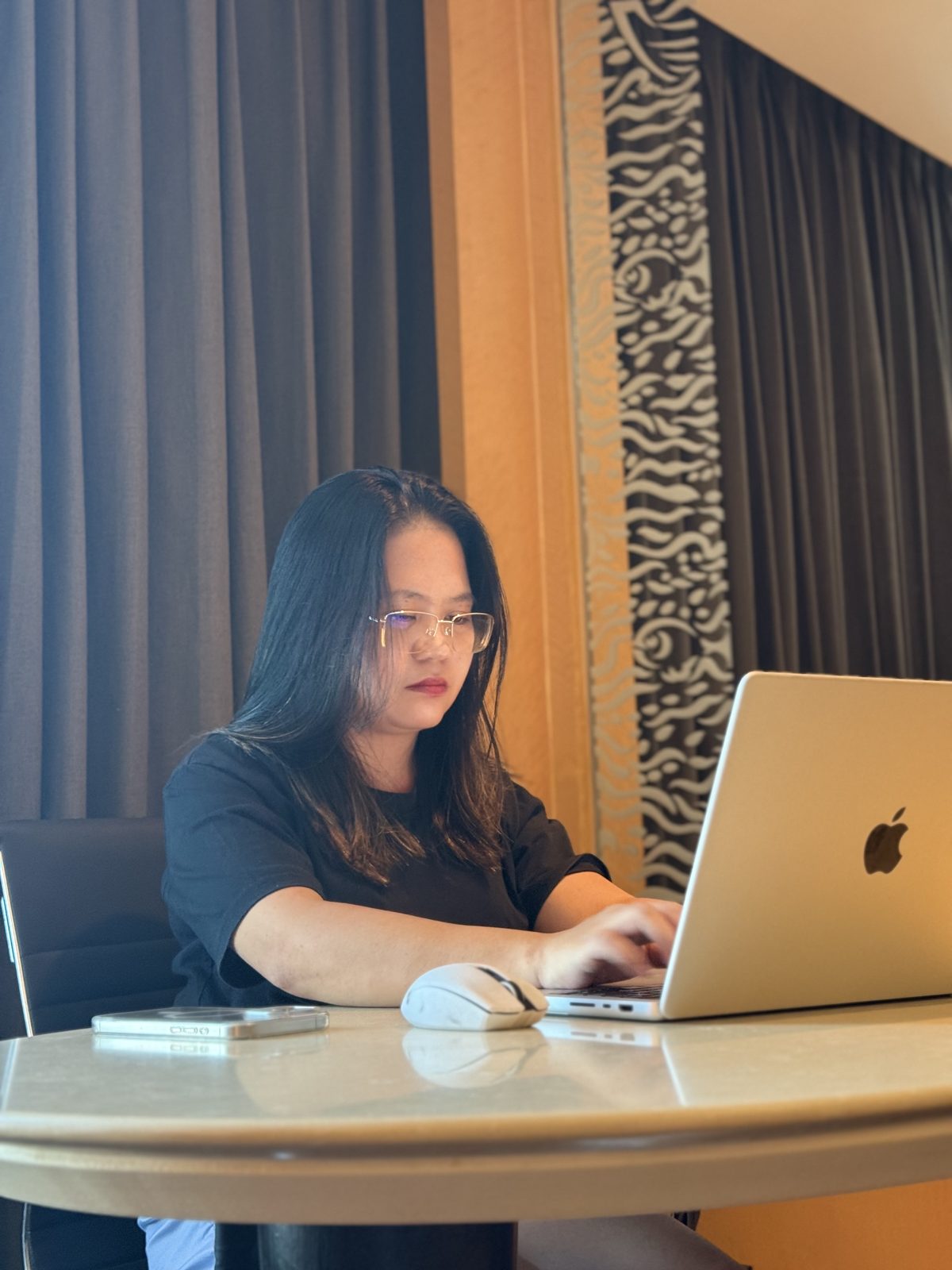
The night shift is survivable, but only if you treat sleep as part of the job, not the thing you squeeze in after everything else. That is the core of every graveyard shift health tip for a virtual assistant in the Philippines: protect your daytime sleep the way you protect a client deadline. Your US client’s 9am is your 9pm or 10pm, so many of us work straight through the hours our bodies expect to be asleep, then try to sleep while the whole barangay is wide awake.
You are far from alone in this. The Philippine IT-BPM industry employed about 1.9 million workers in 2025 (IBPAP figures via the Philippine Daily Inquirer, accessed July 2026), much of it running on US hours, plus the thousands of us doing VA work from home on the same overnight schedule. This guide covers daytime sleep, staying alert, the real long-term health risks, and the truth about night differential pay, including why most freelance VAs are not entitled to it.
Table of Contents
Key takeaways
- Night shift workers usually sleep 1 to 4 hours less than day workers, so daytime sleep needs to be planned and protected, not left to chance (CDC NIOSH, accessed July 2026).
- The big three for daytime sleep: a dark, cool, quiet room; a consistent sleep schedule even on days off; and a caffeine cutoff at least 6 hours before your planned bedtime.
- Long-term night work carries real health risks, including about a 30% higher incidence of type 2 diabetes (2024 meta-analysis, statistically significant in women), so a yearly checkup is part of the job.
- The 10% night differential for work between 10pm and 6am (Labor Code Article 86) applies to Philippine employees. Most freelance VAs paid directly by foreign clients are independent contractors, so it does not apply; you cover the night premium through your rate instead.
Why is the night shift so hard on your body?
Because your body runs on a clock you did not set. Your circadian rhythm is an internal 24-hour cycle, tuned by daylight, that tells your body when to be alert and when to wind down. Working overnight forces you to perform when that clock says sleep, then to sleep when it says wake up. The result: night shift workers usually sleep 1 to 4 hours less than daytime workers, per the US CDC’s occupational safety institute NIOSH (accessed July 2026). You are not weak if the graveyard shift feels brutal. It is biology, and it hits everyone.
That chronic shortfall is why the tired feeling never fully goes away. Some overnight workers develop shift work disorder: ongoing insomnia when you try to sleep, plus heavy sleepiness when you need to work, caused by a schedule that overlaps your normal sleep time (Sleep Foundation, accessed July 2026). If that sounds like you month after month, it has a name, and it is treatable.
I learned early what running on too little sleep does to your work. Back in 2020, I did my first VA job 4 hours a night on top of a full-time job: up at around 5am, biked to work, clocked out around 7pm, then went straight to my laptop. I was tired pero masaya, kasi it proved to me that online work was real. That was not a true graveyard shift, but it taught me that “kaya pa” has a limit, and pushing past it every night is a debt your body will collect.
How do you sleep during the day after working all night?
Make your room read as nighttime to your brain, and keep your sleep hours as fixed as a work shift. Sleep experts agree daytime sleep needs three things: dark, cool, and quiet (Sleep Foundation, accessed July 2026). Morning sunlight hitting your eyes starts the hormonal chain that tells your body the day has begun, exactly what you do not want at 7am after logging off. NIOSH recommends blocking light aggressively: a very dark bedroom makes daytime sleep longer and deeper, and sunglasses on the way home keep the morning light from resetting your clock (CDC NIOSH, accessed July 2026).
Here in the Philippines, “dark, cool, and quiet” takes actual engineering. Daytime heat is punishing, so aim the electric fan at yourself or schedule the aircon for your first hours of sleep. Blackout curtains are ideal, but thick blankets clipped over the window work, and an eye mask costs less than a coffee run. Tricycles, videoke, and roosters do not care about your schedule, so earplugs or a white noise app are legitimate work equipment, the same way a headset is. And if you live with family, your sleep is only as protected as they allow: have the direct conversation that these hours are your work sleep, and ask them to treat you like you are not home.
The schedule matters as much as the room. Keep your sleep and wake times consistent even on days off, because bouncing between a night schedule and a “normal” weekend schedule means your body never adapts to either (Sleep Foundation, accessed July 2026). For days off, NIOSH suggests a compromise: stay up late and sleep until around midday, so a few core hours of sleep stay the same in every 24-hour period (CDC NIOSH training modules, accessed July 2026). Sleep doctors call this anchor sleep, and it is the most useful scheduling idea for night workers with families.
How should you use caffeine and naps to get through the night shift?
Front-load your caffeine and cut it off early, and treat short naps as a tool instead of a failure. Caffeine has a half-life of roughly 5 to 6 hours, meaning half of it is still in your system that many hours later, so the kape that saves you at 2am can be the same kape that ruins your 8am sleep. NIOSH’s guidance is to use caffeine early in the shift and stop several hours before it ends (CDC NIOSH, accessed July 2026). A rule you can actually follow: no caffeine within 6 hours of your planned bedtime, and earlier is better, because studies show even a cup 6 hours out can cut into your deep sleep without you noticing.
Naps are the other half of the toolkit. About 20 to 30 minutes cuts drowsiness without dropping you into deep sleep, which is why sleep experts cap nap length there (CDC NIOSH training modules; Sleep Foundation, accessed July 2026). Two naps earn their keep: a longer one in the late afternoon before your shift, and a short break-time nap during the 3am to 4am slump if your workload allows. You work from home; use that advantage. A call center agent cannot nap at their station, pero you can set a 25-minute alarm between tasks.
What does not work is the usual pattern: no nap, endless 3-in-1 all shift, then lying in bed at 9am with your heart racing. That is borrowing alertness from the exact sleep you need to survive tomorrow’s shift, and the interest is brutal.
What are the long-term health risks of night shift work?
They are real, they build up over years, and pretending otherwise does not protect you. In June 2019, the WHO’s cancer research agency IARC classified night shift work as Group 2A, “probably carcinogenic to humans”, based on limited human evidence combined with strong animal and mechanism studies (IARC 2019 classification, accessed July 2026). Group 2A does not mean night work guarantees cancer. It means the link is serious enough that the world’s top cancer body treats it as probable.
The metabolic risks are better established. A 2024 meta-analysis of cohort studies in BMC Endocrine Disorders found night shift workers had about a 30% higher incidence of type 2 diabetes than daytime workers (hazard ratio 1.30), a link that was statistically significant in women but not in men (accessed July 2026). A 2025 meta-analysis in Frontiers in Public Health linked long-term night work to higher cardiovascular disease risk and mortality, with circadian disruption as the likely mechanism (accessed July 2026).
What do you do with that? Three things. First, the sleep advice above is risk reduction, not comfort advice: consistent, sufficient daytime sleep is the main lever you control. Second, make an annual checkup non-negotiable, including blood sugar, blood pressure, and cholesterol, and tell your doctor you work overnight.
If you are a formally employed night worker (a BPO or agency employee), Republic Act 10151 gives you the right to a free health assessment before a night assignment and at regular intervals during it, and to transfer to a similar day job whenever practicable if you are certified unfit for night work (RA 10151, accessed July 2026). Use that right. Third, if sleep problems persist for months, see a doctor. A blog post, including this one, is where you get context, not treatment.
Do virtual assistants get night differential pay in the Philippines?
Employees do; most freelance VAs do not, and knowing which one you are decides everything. Article 86 of the Labor Code requires every covered employee to be paid a night shift differential of not less than 10% of their regular wage for each hour worked between 10pm and 6am (DOLE Bureau of Labor Relations, accessed July 2026). The 10% is a floor; company policy or a CBA can pay more, and it applies whether you are regular, probationary, or project-based, as long as an employer-employee relationship exists.
Exemptions include retail and service establishments with not more than 5 workers, kasambahay, field personnel, and managerial employees (Labor Law PH, accessed July 2026). Government workers got their own version through Republic Act 11701 in 2022.
Here is what it looks like in pesos, using the NCR minimum wage as the example (Wage Order NCR-26, in effect as of early July 2026):
| Item | Amount |
|---|---|
| NCR daily minimum wage (non-agriculture) | ₱695 |
| Hourly rate (₱695 divided by 8) | ₱86.88 |
| Night differential per hour (10%) | ₱8.69 |
| Extra pay per 8-hour shift fully inside 10pm to 6am | ₱69.50 |
| Extra pay per month (22 working nights) | about ₱1,529 |
Note: NCR’s minimum wage is set to rise to ₱755 on July 19, 2026 under Wage Order NCR-27, which pushes the differential to about ₱9.44 per hour (DOLE via Philippine News Agency, accessed July 2026).
Now the part that matters for us: if you are a freelance VA paid directly by a foreign client, whether through Upwork, OnlineJobs.ph, or a direct arrangement, you are almost certainly an independent contractor, not an employee under the Labor Code. No employer-employee relationship means no Article 86, no night differential, no overtime pay, no 13th month, no matter how many overnight hours you render. Your US client is not violating Philippine labor law; the law simply does not reach that relationship. The workers who ARE entitled are employees of a Philippine employer, like BPO agents or VAs hired through a local agency.
The practical takeaway: as a freelancer, you pay yourself the night differential through your rate. As a VA since 2020 who has worked with multiple clients and one stable client for 5 years, my honest advice is to treat overnight hours as a pricing factor from the first proposal, kasi you cannot renegotiate your body’s cost after you have already agreed to a daytime rate for nighttime work. Another option is shifting your outreach toward Australian clients, whose business day overlaps with Philippine daytime. My beginner VA rates guide has the deeper math on setting that number, and if you are still choosing where to find clients, my OnlineJobs.ph vs Upwork vs Fiverr comparison walks through each option.
One honest note
Two honest warnings. First, this is general information, not medical or legal advice: if you have persistent insomnia, heavy daytime sleepiness, or anything that scares you, see a doctor, not a blog. Second, the night differential rules here describe employees under Philippine labor law as of July 2026. If you are unsure of your status, or an “agency” calls you a contractor while controlling you like an employee, that is a question for DOLE or a labor lawyer.
Frequently asked questions
Is working the graveyard shift bad for your health long term?
It carries real, measurable risks, but they are manageable. Long-term night work is classified by IARC as probably carcinogenic (Group 2A, 2019) and linked to about a 30% higher incidence of type 2 diabetes plus elevated cardiovascular risk (2024 and 2025 meta-analyses). Consistent daytime sleep, yearly checkups, and limits on how many years you stay overnight are how you manage them.
How many hours should you sleep if you work the night shift?
The same 7 or more hours adults need in every 24-hour period; night work does not lower the requirement, it just makes it harder to hit. Plan a main daytime sleep block plus a pre-shift nap to get the total back up.
Do freelance virtual assistants get night differential pay in the Philippines?
Generally no. Article 86’s 10% night differential for work between 10pm and 6am applies to employees of a Philippine employer. A freelance VA paid directly by a foreign client is an independent contractor, so the entitlement does not apply. Build the night premium into your rate instead.
Can you ask your client to move you off overnight hours?
Yes, and it is a normal professional request. Many VA tasks (inbox cleanup, research, reports) do not need you live during US business hours. Propose a split: a few hours of real-time overlap for meetings, the rest done on your daytime. Frame it around fewer mistakes and faster output.
What is shift work disorder and when should you see a doctor?
Shift work disorder is a circadian rhythm sleep disorder where a work schedule overlapping normal sleep time causes ongoing insomnia, excessive sleepiness, or both (Sleep Foundation, accessed July 2026). If symptoms persist for weeks despite fixing your sleep environment and schedule, see a doctor. It is a recognized condition with real treatments.
What are the most important night shift health tips for a virtual assistant in the Philippines?
If you keep only one paragraph from this guide, keep this one. Protect a fixed daytime sleep block in a dark, cool, quiet room, and hold it even on days off. Wear sunglasses on the way home and take your last caffeine at least 6 hours before bed. Nap 20 to 30 minutes before or during the shift instead of drowning the 3am slump in coffee. Get a yearly checkup and tell the doctor you work nights. And if you are a freelancer, remember that no law pays you extra for those hours, so your rate has to.
Night shift work asks more of your body than day work, and the studies above prove that is not just hinaing. But millions of us have built real careers on it, and the difference between those who last and those who burn out is rarely toughness. It is whether they treated sleep as part of the job. Kaya mo ‘yan, basta protektado ang tulog.
Sources
- CDC NIOSH Science Bulletin, Shift Work and Sleep (accessed July 9, 2026)
- CDC NIOSH, Training for Nurses on Shift Work and Long Work Hours, Modules 6, 7, and 9 (accessed July 9, 2026)
- Sleep Foundation, Tips for Shift Workers: How To Get Better Sleep (accessed July 9, 2026)
- Sleep Foundation, Shift Work Disorder (accessed July 9, 2026)
- Erren et al., IARC 2019: Night shift work is probably carcinogenic, Journal of Occupational Medicine and Toxicology, 2019 (accessed July 9, 2026)
- BMC Endocrine Disorders, Night shift work and the risk of type 2 diabetes mellitus: a cohort-based meta-analysis, 2024 (accessed July 9, 2026)
- Frontiers in Public Health, Night shift work and cardiovascular disease: a systematic review and dose-response meta-analysis, 2025 (accessed July 9, 2026)
- DOLE Bureau of Labor Relations, Labor Code Book III (Article 86, Night Shift Differential) (accessed July 9, 2026)
- Labor Law PH, Night Shift Differential Pay (accessed July 9, 2026)
- Republic Act No. 10151 (Employment of Night Workers), Supreme Court E-Library (accessed July 9, 2026)
- Philippine News Agency, NCR minimum wage workers to get historic P85 wage hike and NWPC DOLE, NCR minimum wage (accessed July 9, 2026)
- Philippine Daily Inquirer, IT-BPM industry in PH outpaced global growth in 2025 (IBPAP figures) (accessed July 9, 2026)